
One of the most common questions I hear before someone buys a vibration plate is:
“Is this thing going to ruin my floors?”
It’s a fair concern. You’re talking about a machine that vibrates dozens of times per second. If you’ve ever used one, you know it can feel powerful — especially at higher settings.
So let’s break this down honestly: Can vibration plates damage floors? Sometimes. But usually only under specific conditions. I’ve set these up in apartments, on hardwood, on carpet, even in garage gyms. Here’s what actually matters.
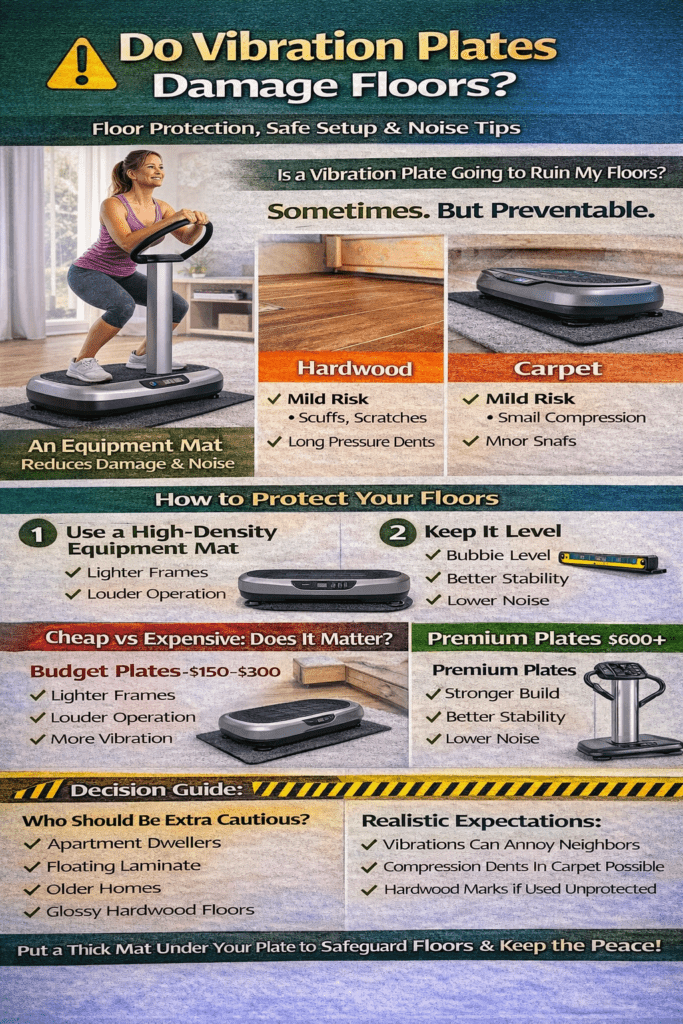
First: What Kind of Movement Are We Talking About?
Vibration plates don’t jump. They don’t slam into the ground like a treadmill. They oscillate.
That means the force is:
- Rapid
- Repetitive
- Low amplitude
- Mostly vertical or pivot-based
If you’re new to how these machines work, this overview helps:
👉 https://www.vibrationforhealth.com/what-is-a-vibration-plate/
Because the motion is controlled and contained within the machine, actual “impact” damage is rare.
But vibration transfer? That’s a different story.
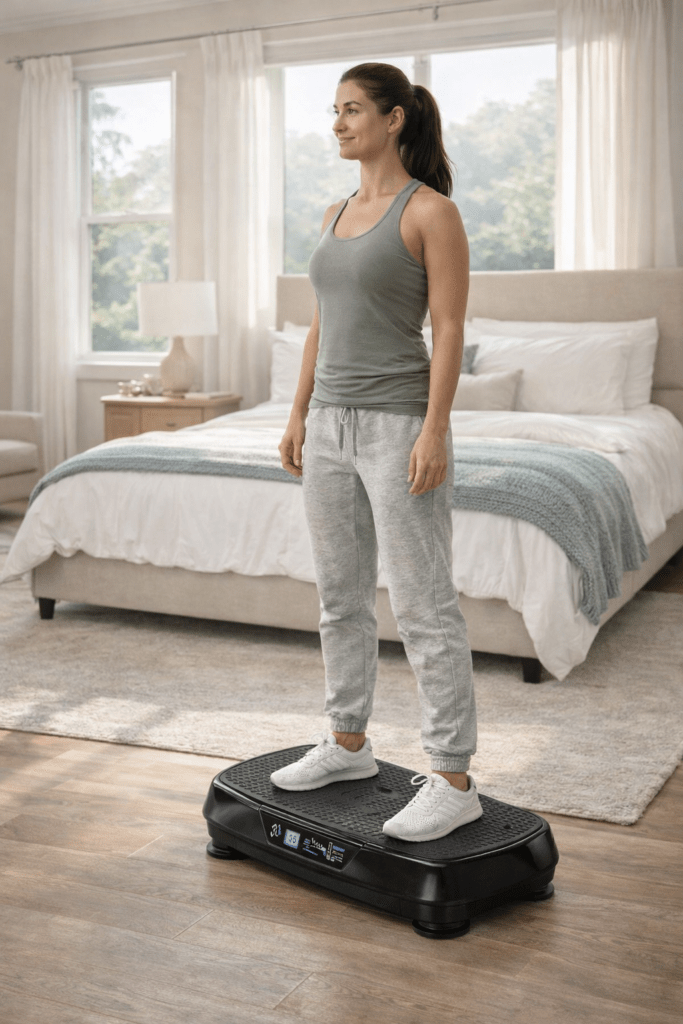
What Floors Are Most at Risk?
Let’s go surface by surface.
1. Hardwood Floors
Hardwood itself usually won’t crack or dent from vibration alone.
The bigger risk is:
- Micro-scratches from sliding
- Rubber feet leaving marks
- Long-term pressure dents if the unit is heavy
If the plate is placed directly on hardwood without protection, cosmetic damage is more likely than structural damage.
2. Laminate or Engineered Flooring
Laminate is more sensitive to vibration transfer. If the floor is floating (not glued down), the oscillation can create:
- Rattling
- Noise amplification
- Minor shifting over time
Not catastrophic damage — but annoying.
3. Tile
Tile is durable, but grout can be sensitive.
Repeated vibration over years could potentially stress grout lines — especially if the subfloor wasn’t well-installed. That said, most home users won’t run enough hours to realistically cause tile damage.
4. Carpet
Carpet is generally safe. The only issue:
- Compression dents over time
- Uneven base if padding is soft
On thick carpet, vibration plates can feel unstable.
The Real Issue: Vibration Transfer to Neighbors
In apartments and condos, the bigger concern isn’t the floor — it’s downstairs.
Vibration plates can:
- Transmit low-frequency vibration through the subfloor
- Create humming sounds
- Cause objects in other rooms to rattle
The heavier and cheaper the unit, the more vibration transfer you may notice. If you want to avoid mechanical issues and rattling problems, this guide helps:
https://www.vibrationforhealth.com/vibration-plate-problems/
Here’s what I’ve learned from setting these up in real homes: The machine itself usually isn’t the problem. The setup is.
Most “damage” complaints come from:
- No mat underneath
- Using max intensity daily
- Lightweight budget units with high vibration noise
- Placing on uneven flooring
When you use proper protection, the risk drops dramatically.
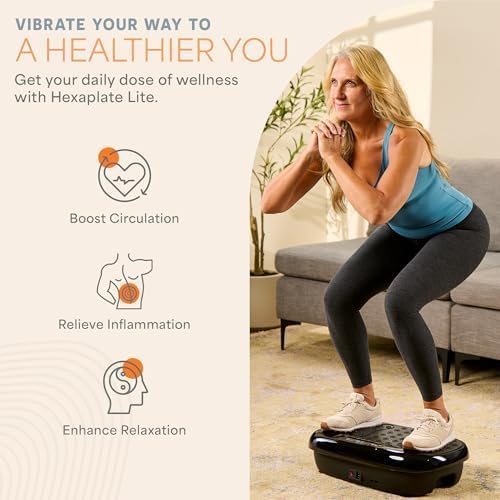
3 Quality Vibration Plates on Amazon
Here are three solid picks that cover different needs (beginner-friendly oscillation, more structured “fitness” use, and a well-known linear option):
- LifePro Waver Vibration Plate (easy entry, popular all-around)
- LifePro HexaPlate Lite (compact, straightforward, lots of guided-style use)
- VT007 Vibration Plate (linear-style option many people seek for a more direct feel)
How to Protect Your Floors
This is simple and inexpensive.
1. Use a High-Density Equipment Mat
A thick rubber mat (at least ½ inch if possible) absorbs vibration and protects against scratches.
Avoid:
- Thin yoga mats
- Foam pads that compress too easily
A dense gym mat is ideal.
2. Keep It Level
If one foot of the machine is uneven, vibration becomes unbalanced — increasing floor stress.
Check leveling before first use.
3. Rotate Position Occasionally
Especially on carpet, rotating the unit prevents compression dents.
4. Avoid Sliding It
Lift — don’t drag. Dragging is what scratches hardwood.
Cheap vs Expensive Plates: Does It Matter?
Yes, somewhat.
Budget plates often:
- Have lighter frames
- Produce harsher vibration
- Run louder
- Transfer more mechanical noise
Mid-range and premium models:
- Have better shock absorption
- Use more stable internal mounting
- Feel smoother
If you’re shopping, this comparison guide helps:
https://www.vibrationforhealth.com
The smoother the machine runs, the less floor stress you’ll notice.
Realistic Expectations
Let’s stay practical. Will a vibration plate crack your foundation? No. Will it collapse your hardwood? Extremely unlikely.
Could it:
- Leave scuffs?
- Dent soft flooring?
- Annoy downstairs neighbors?
Yes — if you don’t use a mat. Most floor issues are cosmetic and preventable.
Trade-Offs
Using a mat:
- Reduces vibration transfer
- Protects floors
- Slightly reduces vibration intensity (minor)
Not using a mat:
- Slightly stronger sensation
- Higher risk of scratches
- More noise transfer
The trade-off is obvious. Always use a mat.
Who Should Be Extra Careful?
- Apartment dwellers
- Homes with floating laminate
- Older homes with loose subfloors
- High-gloss hardwood floors
If you’re concerned about side effects beyond flooring, review safety guidance here:
https://www.vibrationforhealth.com/vibration-plate-side-effects/
Frequently Asked Questions
Can vibration plates crack tile?
It’s highly unlikely under normal home use. Grout may be more vulnerable than tile itself.
Do vibration plates leave marks on hardwood?
They can if dragged or used without a protective mat.
Are vibration plates too loud for apartments?
Some are. Lower intensity settings + thick mats reduce noise significantly.
Will it damage carpet padding?
Over time, compression dents are possible. Rotating position helps.
Is a thicker mat always better?
Yes — to a point. High-density rubber is better than soft foam.
Reputable Resources For More Information
- National Institute on Aging – Exercise Equipment Safety
https://www.nia.nih.gov - Mayo Clinic – Whole Body Vibration Overview
https://www.mayoclinic.org - Harvard Health Publishing – Home Exercise Guidance
https://www.health.harvard.edu
These provide context on safe home exercise practices overall.
Conclusion
Do vibration plates damage floors? Not usually — and almost never if you set them up correctly.
The key is:
- Use a proper mat
- Keep the unit level
- Avoid dragging
- Be mindful in apartments
Most floor concerns are preventable with basic setup precautions. The machine isn’t destructive by nature. But like any piece of equipment, respect the setup — and you’ll protect both your floors and your peace of mind.