If you’re considering buying a vibration plate, you’ve probably asked:
“Is this going to spike my electric bill?”
Fair question. Any machine with a motor that vibrates dozens of times per second sounds like it might be a power hog. Here’s the honest answer:
Most home vibration plates use far less electricity than people expect. In fact, they typically use less power than a space heater, hair dryer, treadmill, or even some blenders. Let’s break this down clearly so you can make a smart decision.
First: How Many Watts Does a Vibration Plate Use?
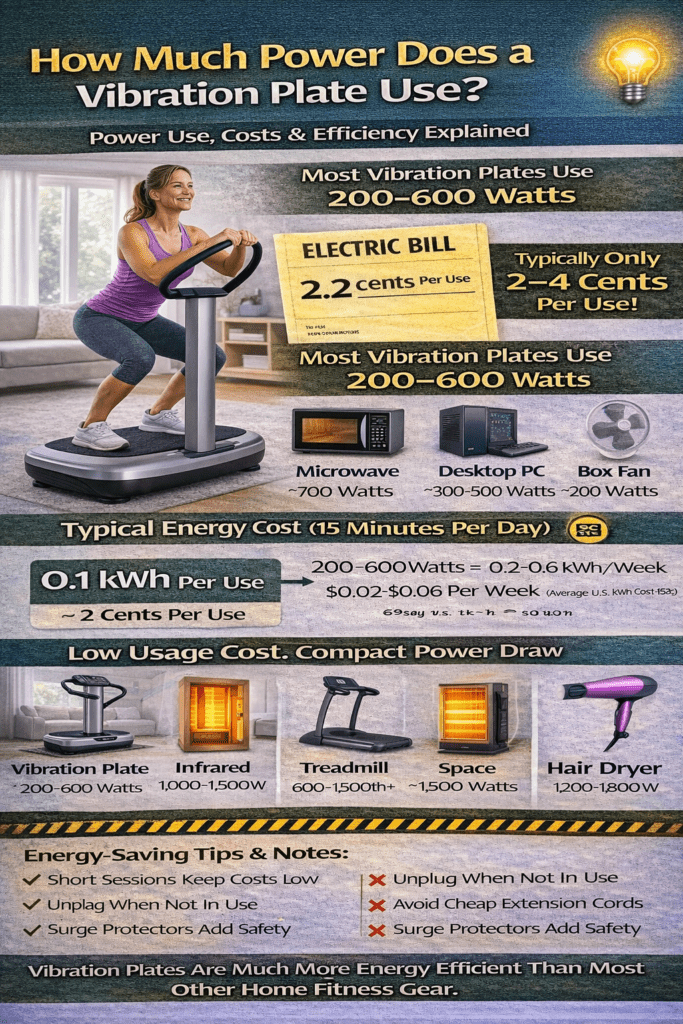
Most home vibration plates fall in this range:
- 200–600 watts for budget and mid-range units
- Some higher-end or tri-planar models may go higher
That means when the machine is running, it’s drawing roughly the same power as:
- Small microwave (low end)
- Desktop computer
- Strong box fan
The motor inside oscillates the platform, but it’s not constantly lifting heavy loads like a treadmill motor. That’s one reason power consumption stays relatively moderate.
What Does That Mean in Real Dollars?
Let’s do practical math.
Electricity is billed in kilowatt-hours (kWh).
If your vibration plate uses:
400 watts (0.4 kW)
And you use it:
15 minutes per day (0.25 hours)
That equals:
0.4 kW × 0.25 hours = 0.1 kWh per session
If your electricity costs around $0.20 per kWh (varies by location), then:
0.1 kWh × $0.20 = $0.02 per session
That’s about 2 cents per use.
Even if you use it 5 days per week, your monthly cost would likely stay under a few dollars. For most people, the energy cost is negligible compared to gym memberships or other equipment.
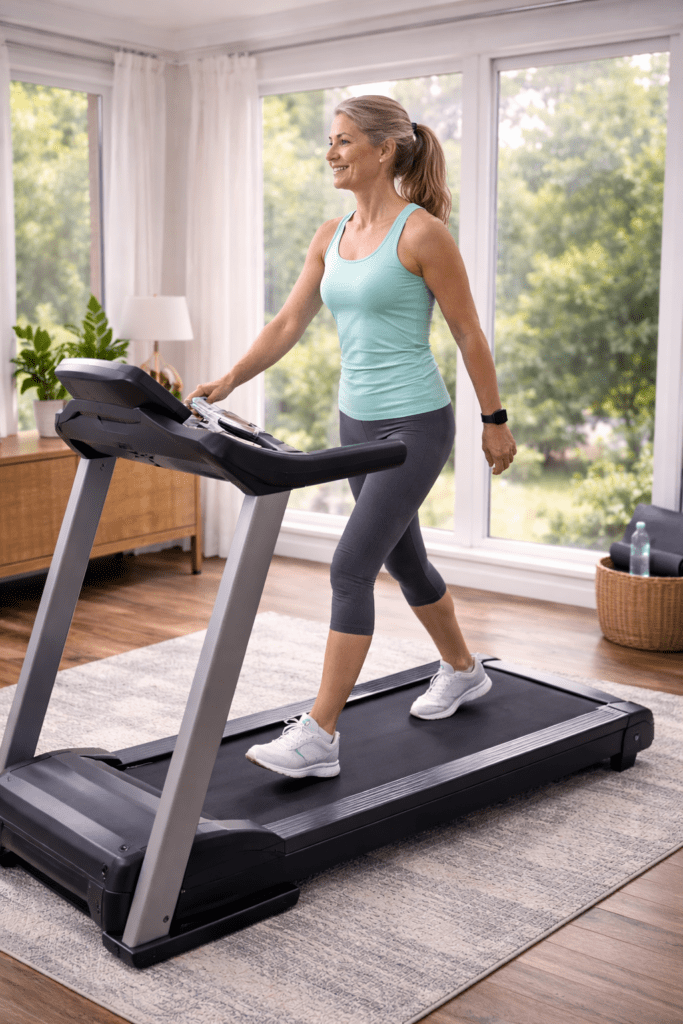
When I first looked into vibration plates, I assumed the cost would be closer to running a treadmill. It’s not. Treadmills often draw 600–1500 watts depending on incline and speed.
A vibration plate only powers a vibration motor—not a belt system carrying your full body weight. In real-world home use, the electricity cost has never been noticeable.
What matters far more is:
- Build quality
- Session frequency
- Intensity settings
If you’re comparing machines, this overview helps:
https://www.vibrationforhealth.com/
Does Higher Intensity Use More Power?
Yes — slightly. At higher vibration settings:
- The motor works harder
- Power draw increases modestly
But because sessions are usually short (10–20 minutes), total consumption stays low. Unlike space heaters that run for hours, vibration plates are short-duration tools.
What About Standby Power?
Some machines draw a small amount of electricity when plugged in but turned off.
To minimize even that:
- Unplug when not in use
- Or use a surge protector with an off switch
Standby draw is typically minimal, but it’s good practice.
Trade-Offs: Power vs Performance
Higher-wattage units often:
- Have stronger motors
- Handle heavier weight capacity
- Run more smoothly
- Last longer under heavy use
But higher wattage doesn’t automatically mean dramatically higher electric bills. The real trade-off isn’t cost per month — it’s: Do you want durability and smoother operation?
If so, slightly higher wattage units can make sense.
Risks Related to Electrical Use
While energy consumption is low, safety matters. Follow basic precautions:
- Plug into a grounded outlet
- Avoid extension cords
- Don’t use near water
- Keep cords away from traffic areas
If you’re reviewing general safety considerations:
https://www.vibrationforhealth.com/vibration-plate-side-effects/
Electrical risks are rare when used properly, but safe setup always matters.
Does It Compare to a Sauna or Other Devices?
For context:
- Infrared sauna: often 1,000–1,500 watts
- Space heater: 1,500 watts
- Treadmill: 600–1,500+ watts
- Hair dryer: 1,200–1,800 watts
Compared to those, vibration plates are moderate users — and because sessions are short, total cost remains small.
Realistic Expectations
Don’t expect your vibration plate to:
- Double your electric bill
- Meaningfully increase home power usage
- Cause strain on modern circuits (if used properly)
Most home circuits easily handle a 400–600 watt device. The bigger long-term cost factors are:
- Initial purchase price
- Maintenance
- Replacement after years of use
If you’re curious about durability:
https://www.vibrationforhealth.com/vibration-plate-problems/
Energy cost is usually the least of your concerns.
Frequently Asked Questions
How many watts does a vibration plate use?
Most use between 200–600 watts depending on model and intensity.
Is it expensive to run daily?
No. Even daily 15-minute sessions typically cost only a few dollars per month.
Does higher wattage mean better results?
Not necessarily. It often means stronger motor capacity and durability, not automatic fitness benefits.
Can I plug it into a power strip?
Yes, but use a quality surge protector. Avoid cheap extension cords.
Will it overload a circuit?
Very unlikely under normal home wiring, unless combined with other high-wattage appliances on the same outlet.
Reputable Resources For More Information
- U.S. Department of Energy – Understanding Electricity Usage
https://www.energy.gov - Energy Star – Appliance Energy Basics
https://www.energystar.gov - National Institute on Aging – Home Exercise Safety
https://www.nia.nih.gov
These provide reliable context about energy consumption and safe home equipment use.
Conclusion
How much electricity does a vibration plate use? Much less than most people expect.
For typical home use:
- Short sessions
- Moderate wattage
- Minimal monthly cost
In practical terms, it’s one of the more energy-efficient fitness devices you can own. If your main concern is operating cost, you can relax. The bigger decision isn’t about electricity.
It’s about:
- Choosing the right model
- Using it consistently
- Following safe setup practices
Your electric bill probably won’t even notice. But your legs just might.