Vibration plates get marketed as low-impact, efficient, and beginner-friendly. And for many people, they are. But here’s the part that doesn’t get enough attention: Vibration plates are still a mechanical stimulus to your body. And any stimulus can have side effects—especially if misused.
I’ve used vibration plates personally, tested different intensities, and seen both great results and avoidable mistakes. The goal of this article isn’t to scare you. It’s to give you clarity.
Let’s walk through the real risks, who should be cautious, and how to use them responsibly.
First: What’s Actually Happening in Your Body?
When you stand on a vibration plate, the platform oscillates rapidly. That motion triggers reflexive muscle contractions—sometimes dozens per second.
This can:
- Activate stabilizer muscles
- Challenge balance
- Increase circulation
- Elevate neuromuscular engagement
If you’re new to how vibration plates work, start here:
https://www.vibrationforhealth.com/how-to-choose-vibration-plate/
That rapid stimulation is what creates benefits—but it’s also what creates potential side effects if intensity or usage is off.
Common Mild Side Effects
Let’s start with what most people experience (if anything).
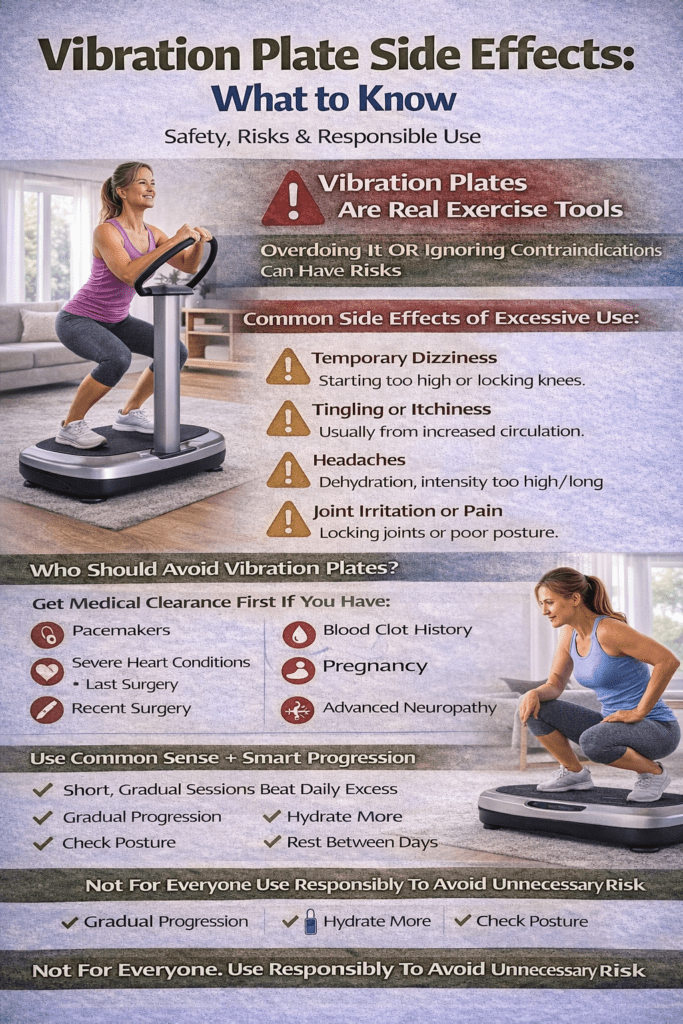
1. Temporary Dizziness
This is usually from:
- Starting too high
- Locking knees
- Standing fully upright without soft joints
Solution: Slight knee bend, lower setting, shorter duration.
2. Tingling or Itchiness
Some people feel mild tingling in legs after sessions. That’s typically increased blood flow.
It should fade quickly. If it lingers, reduce intensity.
3. Muscle Soreness
Yes—vibration can create delayed onset muscle soreness (DOMS), especially in calves and glutes. That’s normal if you’re new. It’s not normal if it’s sharp or joint-based.
4. Fatigue
If you’re running long sessions at high intensity, you can feel drained afterward. Shorter sessions (10–20 minutes) are usually more appropriate for home users.
Less Common but Important Risks
Now let’s get into the stuff that requires more awareness.
1. Joint Irritation
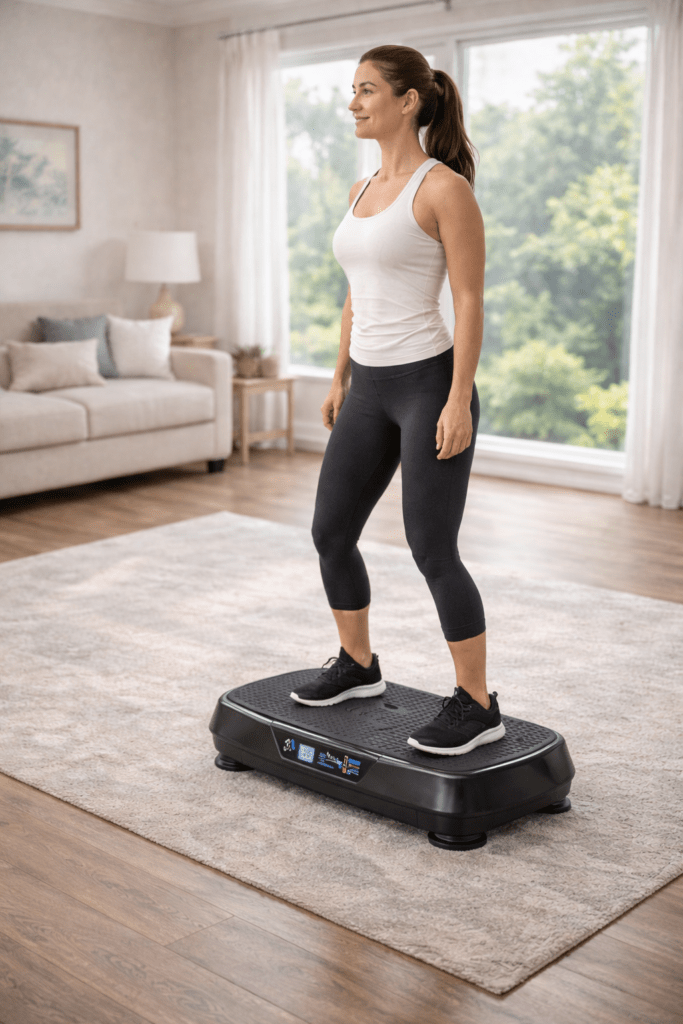
Poor posture can transfer vibration into knees or hips. If you lock your joints, you’re basically sending the oscillation straight into them. Soft knees. Engaged core. Proper stance.
2. Lower Back Strain
Standing upright without core engagement can aggravate lower back discomfort. Static squat holds or supported positions reduce this risk.
3. Headaches
Usually from:
- Too high intensity
- Too long sessions
- Poor hydration
Reduce duration first before blaming the machine.
4. Overuse Fatigue
Daily max-intensity sessions can overstimulate your nervous system. More is not better.
Who Should Avoid or Get Clearance First
This is critical. Vibration plates are not recommended without medical clearance if you have:
- Pacemakers
- History of blood clots
- Pregnancy
- Severe cardiovascular conditions
- Recent surgery
- Acute hernias
- Advanced neuropathy
This is not fear-based—it’s precaution-based. Before starting, especially if you’re over 50 or managing health conditions, talk to your physician.
Here’s what I’ve seen repeatedly: Most side effects don’t come from vibration itself. They come from:
- Ego (starting too high)
- Impatience (too long, too soon)
- Poor posture
- Ignoring body signals
When people treat it like a sprint, they create problems. When they treat it like a tool—results are far better.
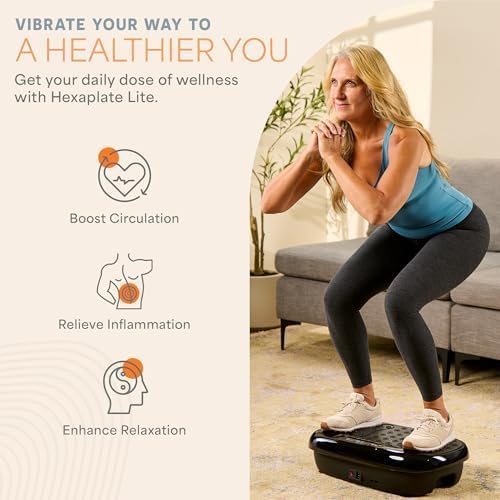
3 Quality Vibration Plates on Amazon
Here are three solid picks that cover different needs (beginner-friendly oscillation, more structured “fitness” use, and a well-known linear option):
- LifePro Waver Vibration Plate (easy entry, popular all-around)
- LifePro HexaPlate Lite (compact, straightforward, lots of guided-style use)
- VT007 Vibration Plate (linear-style option many people seek for a more direct feel)
Trade-Offs: Benefit vs Risk
Vibration plates offer:
- Efficient muscle activation
- Low impact compared to jumping
- Time efficiency
But the trade-off is:
- Mechanical stress
- Neurological stimulation
- Potential joint strain if misused
If you’re choosing a plate, build quality matters. Stability reduces unnecessary vibration transfer.
You can compare models here:
https://www.vibrationforhealth.com
And if you want to understand common mechanical issues:
https://www.vibrationforhealth.com/vibration-plate-problems/
Realistic Expectations (Important)
Vibration plates are not:
- Detox machines
- Fat melting platforms
- Cure-alls
They are:
- Muscle stimulation tools
- Balance training aids
- Circulation boosters
Side effects increase when expectations are unrealistic.
If someone believes standing passively for 45 minutes will transform their body, they’ll push the machine too far. Use it strategically. Not obsessively.
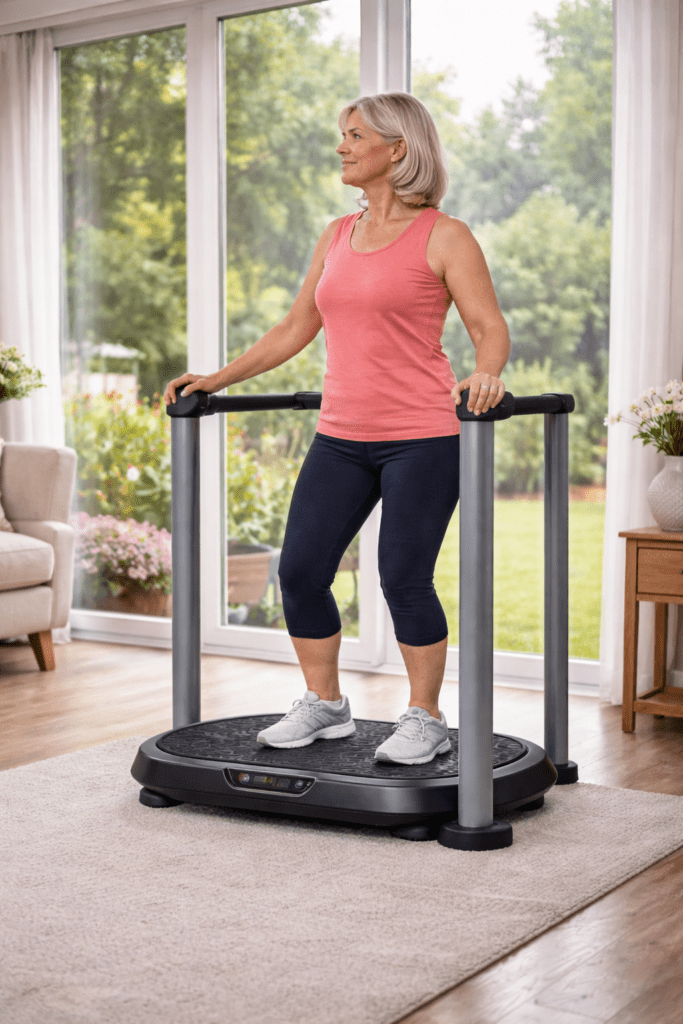
How To Minimize Side Effects
Here’s the simple safety framework I recommend:
1. Start Low
Low frequency, short duration, and progress gradually.
2. Keep Knees Soft
Never lock them.
3. Engage Core
Stability reduces spinal stress.
4. Limit Sessions
Most home users benefit from 10–20 minutes, 3–4 times per week.
5. Rotate Intensity
Avoid max setting every time.
6. Hydrate
Circulation changes + dehydration can increase headaches.
7. Listen to Your Body
Sharp pain = stop.
Frequently Asked Questions
Are vibration plates dangerous?
For healthy individuals using them properly, they’re generally considered safe. Problems usually arise from misuse or preexisting conditions.
Can vibration plates cause nerve damage?
There’s no strong evidence of nerve damage in healthy users following normal guidelines. However, those with neuropathy should consult a physician.
Do vibration plates affect blood pressure?
They can temporarily increase circulation. If you have blood pressure issues, get medical clearance first.
Is it safe to use daily?
For some, yes—but lower intensity and shorter sessions are smarter.
Can vibration worsen arthritis?
If posture is poor or intensity too high, it may aggravate symptoms. Gentle settings are usually better tolerated.
Resources For More Information
- Mayo Clinic – Whole Body Vibration Overview
https://www.mayoclinic.org - National Institute on Aging – Exercise Safety
https://www.nia.nih.gov - Harvard Health Publishing – Exercise & Aging
https://www.health.harvard.edu
These offer grounded, medical context beyond product marketing.
Conclusion
Vibration plate side effects are real—but manageable. Most issues come from:
- Overdoing it
- Ignoring contraindications
- Poor posture
- Unrealistic expectations
Used properly, vibration plates can be a smart, efficient tool. Used aggressively or carelessly, they can create avoidable discomfort. The key isn’t fear, rather, it’s respect.
Respect the intensity, your body, and treat vibration training as a supplement—not a shortcut. That mindset keeps you safe—and actually gets better results.