
If you’re trying to decide between a vibration plate and a sauna, you’re basically choosing between two totally different “feel good” tools that get talked about like they do the same thing. They don’t.
I’ve used both as part of real-life routines (not fantasy routines where you have unlimited time, unlimited money, and never get interrupted). And here’s the practical truth:
- Vibration plates are a training tool (muscle + balance + movement stimulus).
- Saunas are a recovery tool (heat + relaxation + circulation-like effects).
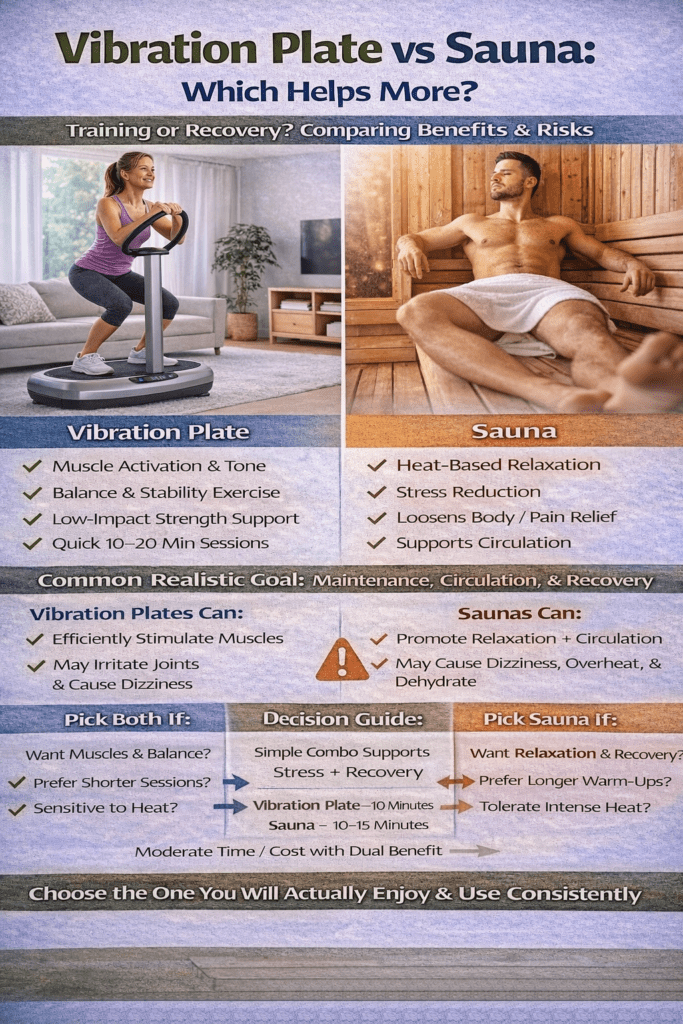
Both can be great. Both have risks. And neither replaces the boring basics (sleep, walking, strength training, hydration).
Let’s compare them in a way that actually helps you decide.
What You’re Really Buying
Vibration Plate (what it does)
A vibration plate creates rapid oscillations under your feet, which triggers reflexive muscle contractions and challenges stability. It can feel like your muscles are “waking up” fast, especially in squats and holds.
If you want a quick primer on the health benefits first:
Sauna (what it does)

A sauna exposes you to heat stress. Your heart rate rises, blood vessels dilate, you sweat, and a lot of people feel calmer afterward. Cleveland Clinic notes saunas are generally safe when used within reason, and highlights dehydration as a major risk.
Harvard Health also notes heat dilates blood vessels (lowering blood pressure), and warns people with low blood pressure or serious heart issues should be cautious; typical sauna time is often 15–20 minutes.
My Personal Framing
When I want to feel stronger, steadier, and more “activated” in my body, I reach for a vibration plate.
However, when I want to downshift my nervous system, loosen up stiffness, and sleep better, I reach for the sauna.
If you’re picking just one, the right answer is usually:
Which one will you actually use consistently without feeling worse afterward?
Benefits: What Each One Does Best
Vibration Plate shines for…
1) Muscle activation + strength support
It’s not the same as lifting weights, but it can make basic positions (squats, calf raises, supported lunges) feel more intense in less time.
2) Balance & stability training
Especially relevant if you’re over 40/50 and want something low impact that still challenges stabilizers.
3) Busy schedules
A legit 10–15 minute routine can be enough for many people to feel benefits.
If you’re comparing models and features:
Sauna shines for…

1) Relaxation + stress reduction
Cleveland Clinic calls out stress reduction and improved sleep as common benefits people report.
2) That “recovery” feeling
Heat can help some people feel looser and less stiff. Cleveland Clinic also notes potential pain relief and muscle soothing benefits (with proper hydration).
3) Cardiovascular conditioning (sort of)
Regular sauna use is associated with cardiovascular benefits in observational research, but it’s not the same as exercise. Harvard Health describes physiologic effects like vasodilation and changes in blood pressure and heart workload.
A review in Mayo Clinic Proceedings summarizes evidence linking sauna bathing with various health benefits while also noting uncertainty and mechanisms under study.
Trade-Offs and Risks
This is the part that should drive your decision.
Vibration plate risks (mostly about how you use it)
Common issues:
- dizziness / nausea (too high, too long, locked knees)
- joint irritation (posture issues)
- headaches (overdoing, dehydration, sensitivity)
The bigger issue: contraindications. If you have certain medical conditions (pacemaker, clot history, pregnancy, recent surgery, etc.), you should get medical clearance.
A good starting point for safety:
Sauna risks (mostly about heat + dehydration + blood pressure)
Cleveland Clinic calls out dehydration as a big risk, and advises extra caution/medical advice in scenarios like pregnancy, certain heart conditions, older adults, and after alcohol use.
Harvard Health emphasizes caution for people with low blood pressure and serious heart issues, and suggests practical guidelines (time limits, gradual cool-down, hydrate).
If you’re prone to dizziness, low blood pressure, or dehydration headaches, sauna can humble you fast.
Realistic Expectations (No Fantasy Results)
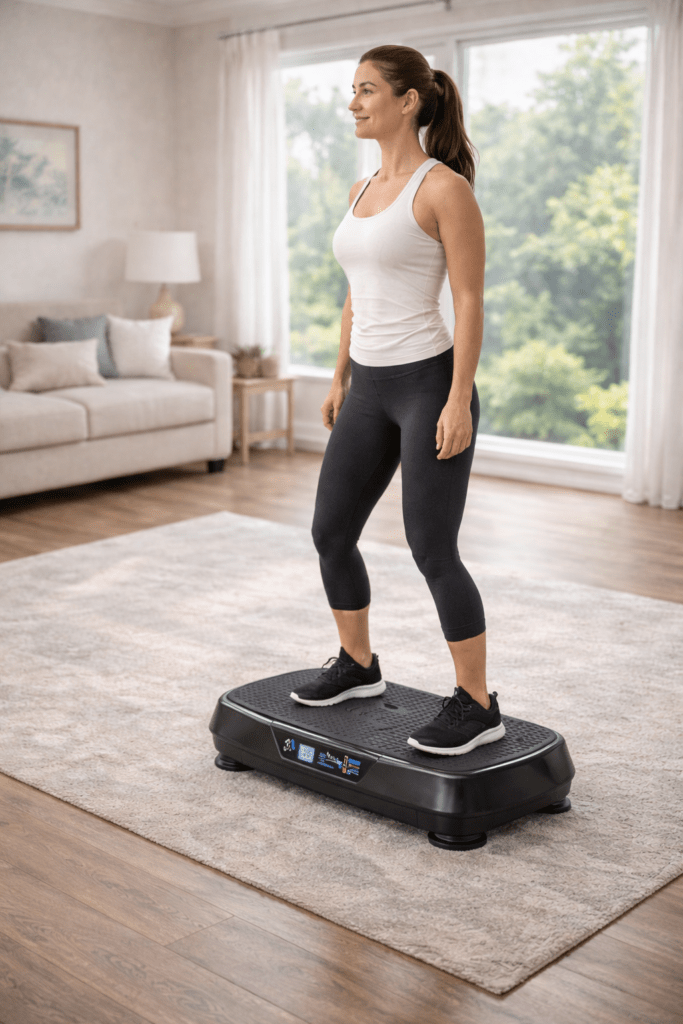
What a vibration plate can realistically do
- Improve how “awake” your muscles feel
- Support balance practice
- Make short sessions feel productive
- Complement walking and strength work
What a sauna can realistically do
- Help you relax
- Improve subjective recovery and sleep for many people
- Provide heat exposure benefits that may support cardiovascular health in some contexts (but not a substitute for exercise).
What neither will do
- Replace strength training + cardio
- Cause effortless fat loss
- “Detox” your body in a magical way (your liver and kidneys are still the main detox organs)
Decision Guide: Which One Should You Choose?
Pick vibration plate if:
- A time-efficient muscle + balance tool is a priority for you
- You need low-impact strength stimulation
- Your preference is doing “something active” rather than sitting still
Pick sauna if:
- Relaxation, stress reduction, and recovery are your main goals
- You’re already training and want a recovery ritual
- You tolerate heat well and can hydrate properly
Pick both (best-case combo) if:
- You want training + recovery
A simple combo: vibration plate 10 minutes, sauna 10–15 minutes, 2–3x/week (with hydration and common sense).
If you want a troubleshooting guide for vibration plate discomfort and problems:
Frequently Asked Questions
Is sauna “as good as exercise”?
No. Harvard Health and others note the physiologic effects can mimic some exercise responses, but it’s not a replacement for movement and strength training.
Which is better for weight loss?
Neither is a magic weight-loss tool. Sauna weight loss is mostly water weight (temporary). Vibration plates can support muscle activity but still require nutrition + overall activity.
Which is safer for older adults?
Depends. Sauna can be risky with low blood pressure/dehydration; vibration plates can be risky with balance issues and certain medical contraindications. Either way, go conservative and consider medical guidance if you have conditions.
Can I do sauna if I have high blood pressure?
Some evidence suggests potential benefits, but safety depends on the individual and medications. Harvard Health recommends people with serious/unstable heart issues avoid it, and others should be cautious. Talk to your clinician.
Can vibration plates cause dizziness?
Yes—especially early on or at high intensity. Soft knees, lower settings, short sessions help. (And stop if symptoms persist.)
Reputable Resources for More Information
- Cleveland Clinic – Sauna benefits and risks
- Harvard Health – Safety notes and practical sauna guidance
- Mayo Clinic Proceedings review – Evidence overview on sauna bathing
Conclusion
If you want the simplest answer:
- Choose a vibration plate when your priority is muscle activation, balance, and efficient movement.
- Choose a sauna when your priority is recovery, relaxation, and heat-based wellness.
The best tool is the one you’ll use consistently without pushing past your body’s limits. If you can swing both, they actually complement each other well—just don’t confuse “feeling good” with “doing everything.”
If you want, tell me your top goal (fat loss, recovery, pain/stiffness, balance, stress) and any constraints (blood pressure, joint issues, time), and I’ll recommend a simple weekly plan using one or both.