
If I could sit down with every new vibration-plate owner for five minutes, I’d tell them the same thing: The fastest way to get results is to stop treating it like a “more is better” machine.
Most people either underuse it (two random sessions, then it goes under the couch)… or they overuse it (daily, high intensity, long sessions) and end up feeling wiped out, dizzy, or achy. The sweet spot is surprisingly simple: short sessions, smart intensity, consistent weekly rhythm.
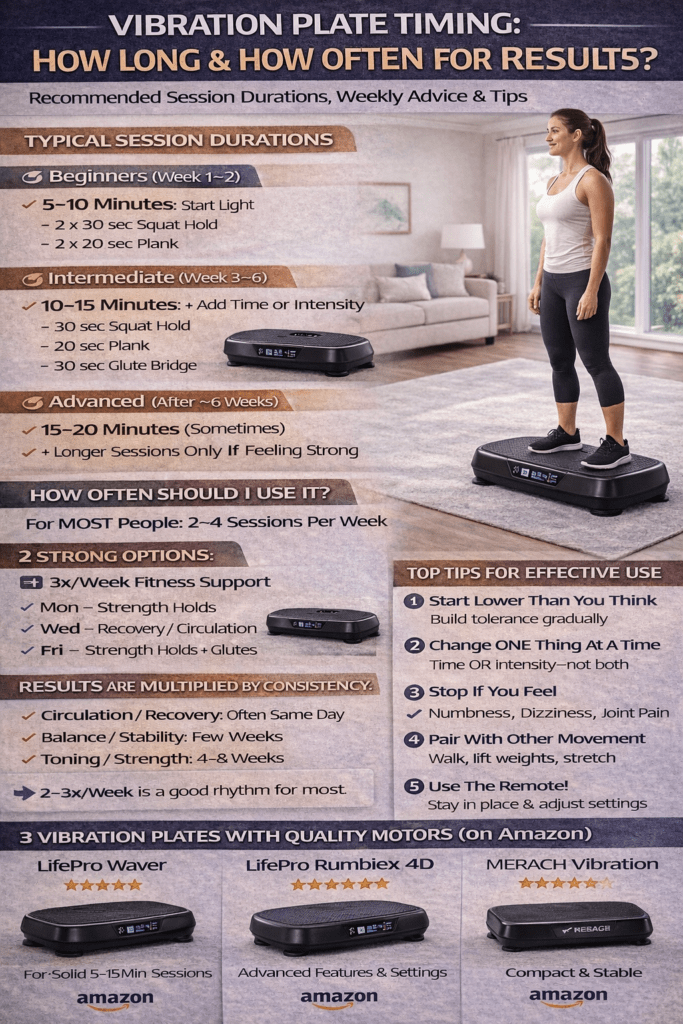
Most people naturally use their plates in short bouts—often 5–10 minute sessions—because it’s easy to fit into real life.
Let’s make this practical: typical session durations, weekly frequency, what “results” usually look like, and how to dial this in without overdoing it.
3 Vibration Plates for Home Use:
These are solid, popular options with reliable performance for the typical 5–15 minute sessions most people actually do:
What “Results” Should You Expect (And How Fast)?
“Results” depends on what you mean:
- Circulation / recovery: often noticeable the same day or within a week (legs feel lighter, less stiffness) if you’re consistent.
- Balance / stability: usually a few weeks of steady use.
- Strength and muscle tone support: typically 4–8 weeks when you combine the plate with basic exercises (squat holds, planks, calf raises), not just standing.
The plate is best as a multiplier—it makes simple moves more demanding and can help you show up on low-energy days. It’s not a replacement for walking, lifting, or nutrition. (If you treat it like “seasoning,” you win. If you treat it like the entire meal, you’ll get frustrated.)
Typical Recommended Session Durations
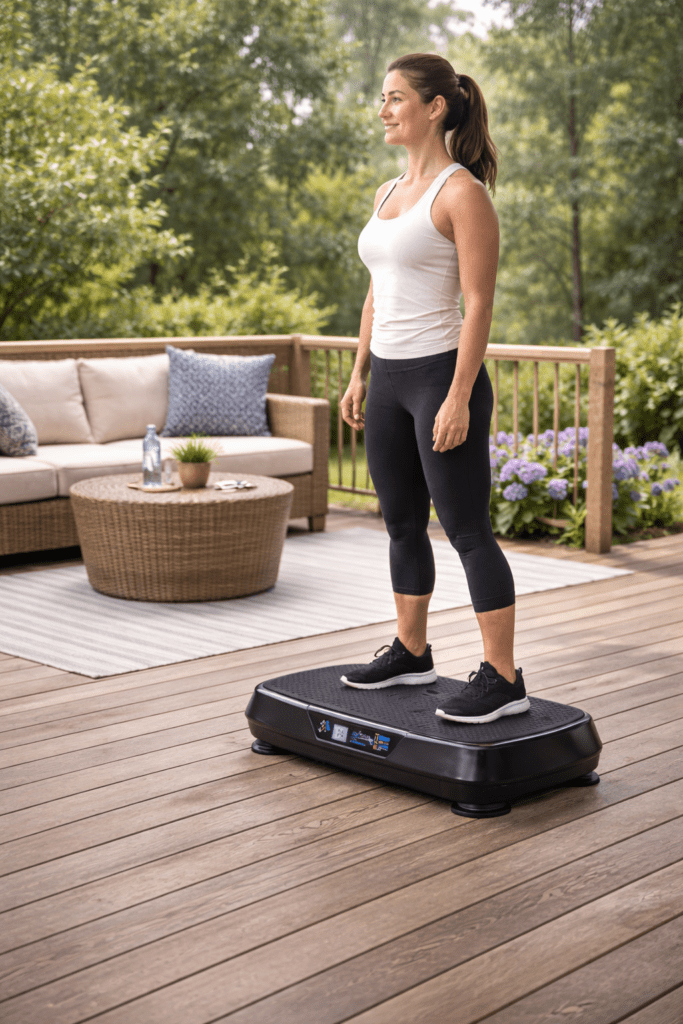
Beginners (Week 1–2): 5–10 minutes
Start lighter than you think. Cleveland-level intensity on Day 1 is how people end up hating their plate.
A good starting guideline is 5–10 minutes at low intensity, letting your body adapt to the sensation. University Hospitals gives this exact “start slow” recommendation and advises stopping if you feel discomfort or nausea.
Beginner session example (7 minutes):
- 2 min gentle standing (soft knees)
- 2 x 30 sec squat hold (rest 30 sec)
- 2 x 20 sec plank (hands or forearms on plate, rest 40 sec)
- 1–2 min easy standing to finish
Intermediate (Week 3–6): 10–15 minutes
Once the sensation isn’t “new” anymore, you can add time or intensity—just not both at once. Short sessions are common, which is reassuring: you don’t need long workouts to use this effectively.
Intermediate session example (12 minutes):
- 3 min warm-up standing + calf pumps
- 3 rounds:
- 30 sec squat hold
- 20 sec plank
- 30 sec glute bridge (feet on plate)
- Rest 30–45 sec
Advanced (After ~6 weeks): 15–20 minutes (sometimes)
You can go to 15–20 minutes if your body tolerates it and your form stays clean. But here’s the catch: longer sessions increase fatigue of stabilizers, and sloppy form is where people irritate knees/hips/back.
A recent expert roundup (physical therapists/trainers) framed 2–4 sessions per week as a “sweet spot,” starting at 5–10 minutes and building toward 15–20 as your body adapts.
How Often Per Week?
The “Best Results” Schedule for Most People: 2–4x/week
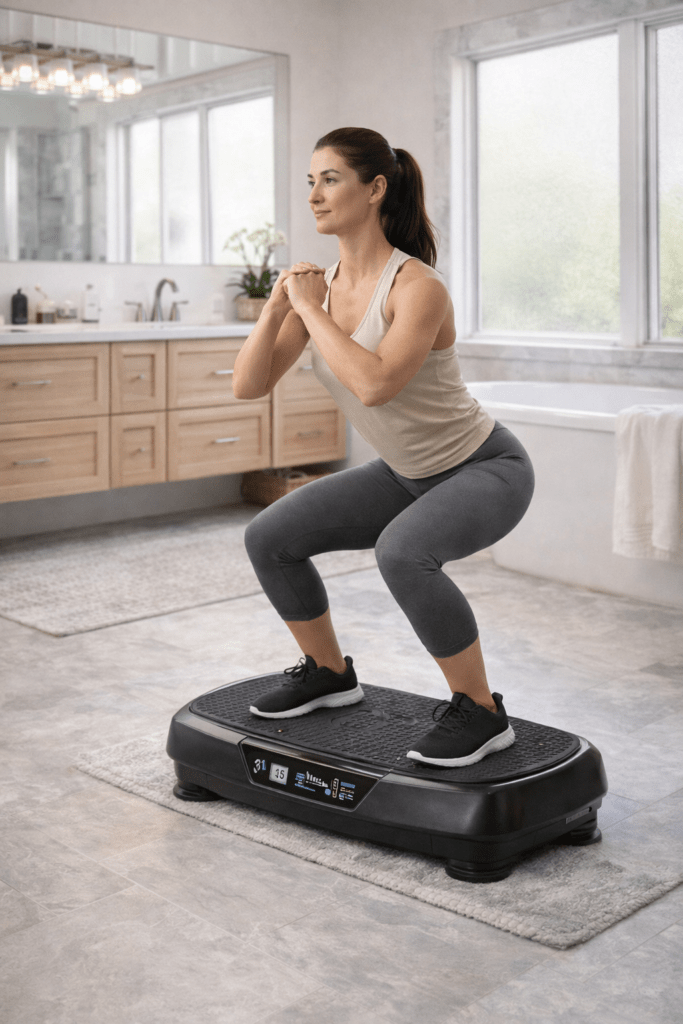
This is the schedule I see people stick with long-term, and it matches the idea that too much high-intensity vibration can backfire via fatigue.
Two strong options:
Option A: 3x/week fitness support
- Mon: Strength holds (squat + plank focus)
- Wed: Recovery/circulation session
- Fri: Strength holds + glutes
Option B: 4x/week habit builder
- 2 “work” sessions (more holds, moderate intensity)
- 2 “easy” sessions (gentle standing + calves + breathing)
Can you do it daily?
You can, but I’d keep daily use low intensity and short (think circulation/recovery). The mistake is daily hard sessions. That’s where people feel run down.
How to Progress Without Overdoing It
Here’s the progression rule I use:
Change one thing at a time: time or intensity or exercise difficulty.
Examples:
- Add 2 minutes total time (keep intensity the same)
- Increase intensity slightly (keep time the same)
- Keep time/intensity, but switch from hands-on-plate plank → forearms-on-plate plank
Also, keep your joints happy:
- Soft knees when standing
- Don’t lock elbows on planks
- If you feel tingling/numbness that lingers, back off
Features to Look For When Timing Matters
If you’re going to use a vibration plate consistently, you want a plate that behaves consistently—especially after minute 6 when fatigue starts.
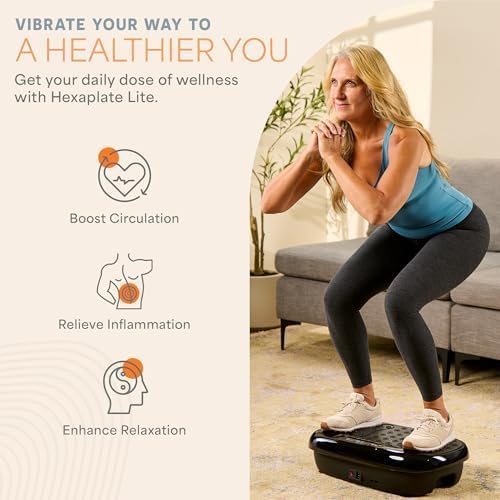
Look for:
- A motor that doesn’t “fade” under load
Bigger users or plank-based workouts expose weak motors fast. - Stable platform + non-slip feet
If the plate creeps across the floor, your workouts become annoying (and riskier). - Useful low-end settings
Beginners need gentle settings that still feel smooth and controlled. - Timer / programs / remote
Timers help you keep sessions short (which is a good thing). Remotes keep you from bending mid-session.
Helpful Links:
These pages pair perfectly with a “how long/how often” article because they answer the natural follow-up questions (what to do, what to watch for, and specific routines):
- Vibration Plate Problems (troubleshooting + realistic use patterns): https://www.vibrationforhealth.com/vibration-plate-problems/
- Beginner exercises: https://www.vibrationforhealth.com/vibration-plate-workouts/
- Lymphatic drainage: https://www.vibrationforhealth.com/vibration-plate-for-lymphatic-drainage/
Frequently Asked Questions
Is 10 minutes enough to get results?
Yes—especially for circulation/recovery and for beginners. 5–10 minute sessions are common in real use.
Should I use it before or after a workout?
Before workouts: great for warm-up and muscle activation.
After workouts: great for circulation and gentle recovery.
How do I know if I’m doing too much?
If you feel persistent dizziness, joint irritation (knees/hips/back), or lingering numbness/tingling—reduce intensity and shorten sessions. University Hospitals specifically recommends starting low/short and stopping if you feel discomfort or nausea.
Do I have to exercise on it, or can I just stand?
Standing works fine for recovery and circulation. For strength/toning support, add simple holds (squat hold, plank) for the best payoff.
Conclusion
If you want results without burnout, aim for this:
- Start: 5–10 minutes
- Progress to: 10–15 minutes
- Frequency: 2–4 sessions per week
- Daily use (optional): keep it easy and short