
If you’ve ever looked at buying a vibration plate, you’ve probably had this exact thought:
“This looks useful… but is it going to shake my whole house?”
That concern is valid. I’ve used vibration plates in apartments, single-story homes, and shared spaces—and noise is one of the most misunderstood parts of owning one. Some models are barely noticeable. Others can sound like a washing machine stuck in spin cycle.
Let’s break down how loud vibration plates really are, what actually causes the noise, and how to choose a quieter model so you don’t annoy family members, neighbors, or downstairs tenants.
How Loud Is a Vibration Plate, Really?
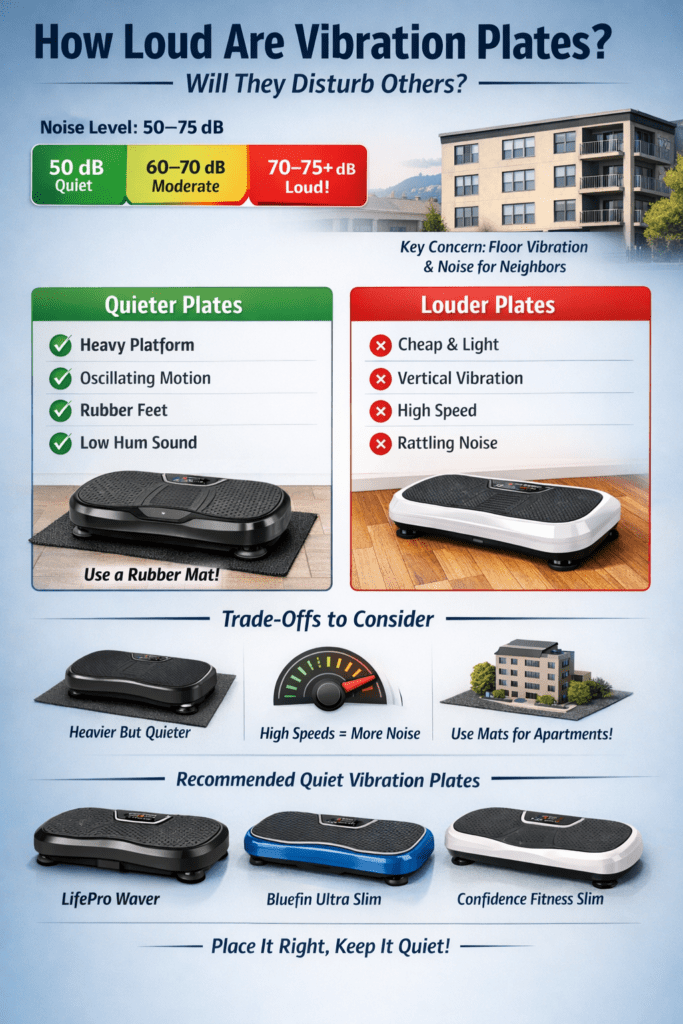
Most home vibration plates fall into a range of 50–75 decibels (dB):
- 50–60 dB: Comparable to a quiet conversation or dishwasher
- 60–70 dB: Similar to a vacuum cleaner across the room
- 70–75+ dB: Clearly noticeable and potentially disruptive
But here’s the part most people miss:
The vibration traveling through your floor matters more than the motor noise.
A vibration plate doesn’t just make sound—it transfers energy into whatever it’s sitting on. That’s why two plates with similar motors can feel very different in real life.
What Actually Makes a Vibration Plate Noisy?
From hands-on experience, noise comes from four main sources, not just one.
1. Motor Quality (This Is the Big One)
Cheaper plates use lightweight motors with minimal balancing. These tend to:
- Rattle
- Whine at higher speeds
- Get louder over time
Higher-quality motors run smoother and produce a lower, less annoying hum.
2. Vibration Type (Oscillating vs. Linear)
- Oscillating plates (side-to-side motion) are usually quieter
- Linear or vertical plates often feel more intense—and louder
If quiet use matters, oscillating models are typically easier to live with.
3. Platform Weight & Build
Lightweight plastic platforms amplify sound. Heavier steel-frame platforms:
- Absorb vibration better
- Reduce rattling
- Feel more stable underfoot
This is one of those areas where price really does reflect quality.
4. Floor Surface (Often Overlooked)
A plate on tile or hardwood will sound much louder than the same plate on:
- Thick rubber mat
- Gym flooring
- Dense carpet with padding
A simple mat can reduce perceived noise by 30–50%.
Will a Vibration Plate Disturb Other People?
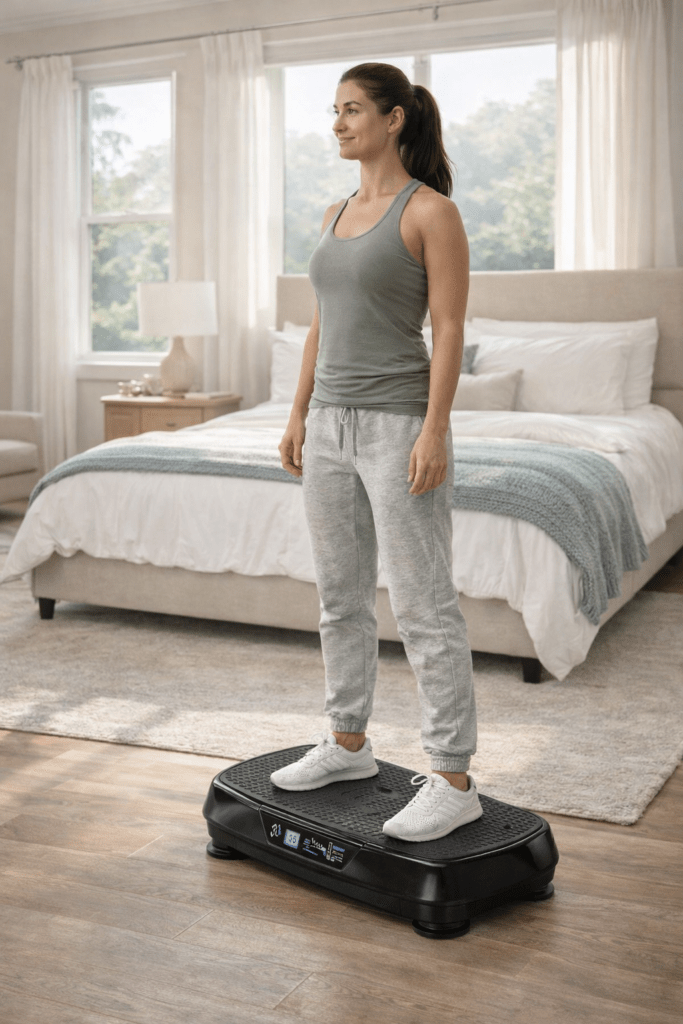
Here’s the honest answer.
Usually No If:
- You live in a single-family home
- You use it during daytime hours
- You place it on a rubber mat
- You use moderate settings
Possibly Yes If:
- You live in an apartment or condo
- You have downstairs neighbors
- You use high speeds on a lightweight floor
- The plate is cheaply built
If quiet operation is a top concern, your buying decision matters more than your usage time.
Features to Look For in a Quieter Vibration Plate
If you want something that won’t disturb others, here’s what I personally prioritize.
✅ Heavy Platform (40+ lbs)
Heavier plates transmit less vibration into the floor.
✅ Oscillating Motion
These are easier on joints and easier on ears.
✅ Rubberized Feet or Base
This helps isolate vibration from your flooring.
✅ Lower Max Speed Range
More isn’t always better. Ultra-high speeds equal more noise.
✅ Good User Reviews Mentioning Noise
Look for phrases like:
- “Quiet enough for apartment”
- “Doesn’t wake the house”
- “Low hum, no rattling”
3 Quieter Vibration Plates Worth Buying
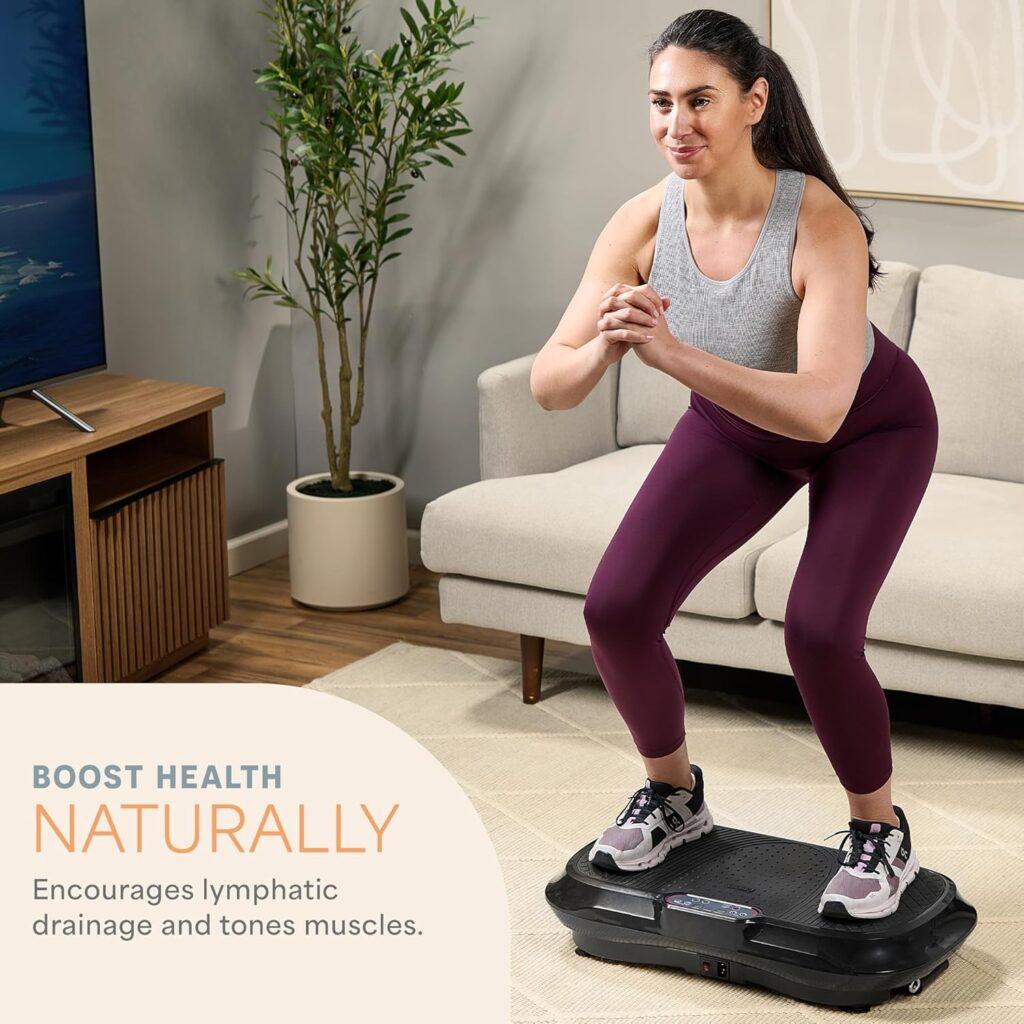
These are consumer-tested models known for smoother, quieter operation compared to budget plates.
LifePro Waver Vibration Plate
Why it’s quieter:
- Balanced oscillating motor
- Solid platform with good damping
- Lower mechanical rattle than many competitors
On Amazon: LifePro Waver
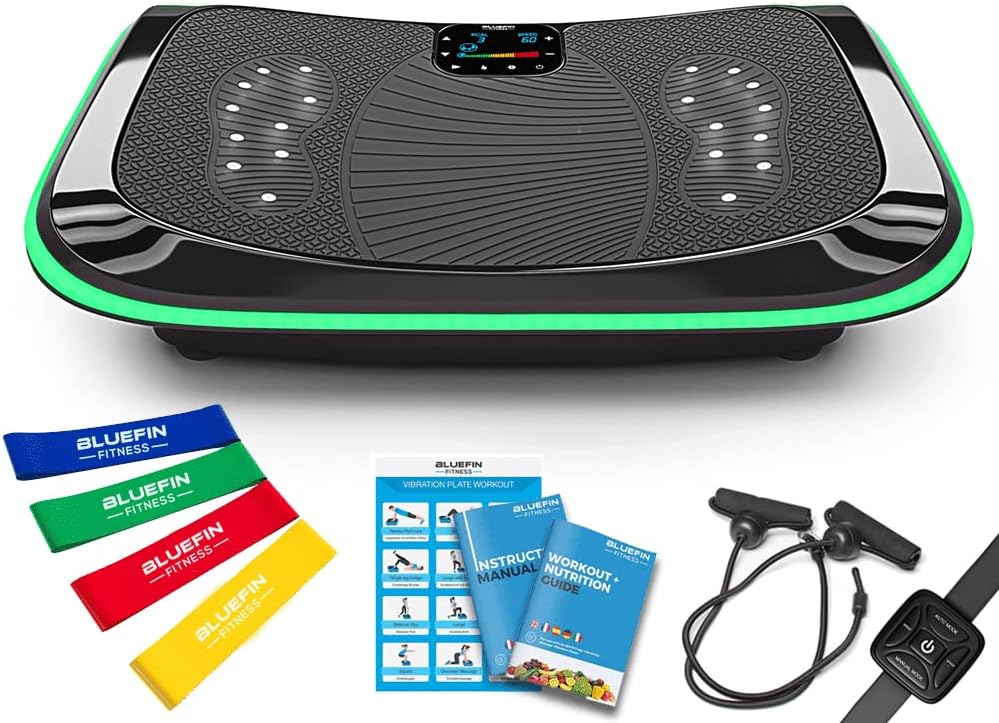
Bluefin Fitness Ultra Slim Vibration Plate
Why it’s quieter:
- Heavy, low-profile design
- Excellent vibration isolation
- Less floor transfer than lighter models
On Amazon: Bluefin 4D Triple Motor Vibration Plate
Confidence Fitness Slim Vibration Plate
Why it’s quieter:
- Smooth oscillation
- Lower top-end intensity
- Good option for shared living spaces
On Amazon: Confidence Vibration Plate
(Always use a mat underneath—no exceptions.)
Realistic Expectations (No Marketing Hype)
A vibration plate is not silent. You will hear:
- A low hum
- Mild mechanical vibration
- Some floor feedback at higher settings
But if you choose a well-built model and use proper placement, it should not:
❌ Sound like power tools
❌ Shake walls
❌ Travel through the entire house
Used correctly, most people can watch TV, work, or have a conversation in the same room.
Trade-Offs & Risks to Be Aware Of
- Quieter plates are usually heavier (less portable)
- Ultra-cheap models get louder over time
- High-speed settings increase noise exponentially
- Ignoring floor protection is the fastest way to annoy neighbors
If you’re noise-sensitive—or live in close quarters—don’t chase the highest vibration numbers.
Frequently Asked Questions
Are vibration plates louder than treadmills?
Usually no. A treadmill produces impact noise. Vibration plates produce low-frequency hum.
Can I use one in an apartment?
Yes—but only with a mat, moderate settings, and reasonable timing.
Do quieter vibration plates still work?
Absolutely. Consistency matters more than intensity.
Does noise increase as the plate ages?
It can, especially with cheaper motors and loose internal components.
Helpful Resources:
For deeper guidance, these pages are worth exploring:
- Beginner’s Guide to Vibration Plates
https://www.vibrationforhealth.com/how-to-use-vibration-plate/ - Are Vibration Plates Safe for Daily Use?
https://www.vibrationforhealth.com/how-often-use-vibration-plate/ - Best Vibration Plate Exercises at Home
https://www.vibrationforhealth.com/vibration-plate-workouts/
Reputable Resources for More Information
- National Institutes of Health (NIH) – Whole Body Vibration Research
https://www.ncbi.nlm.nih.gov - Mayo Clinic – Exercise Equipment & Safety
https://www.mayoclinic.org - International Organization for Standardization (ISO) – Vibration Exposure
https://www.iso.org
Final Thoughts
Noise shouldn’t be the reason you avoid a vibration plate—but it should influence which one you buy. From experience, most frustration comes from:
- Buying too cheap
- Skipping floor protection
- Expecting silent operation
Choose a solid, oscillating model, place it correctly, and use realistic settings. Do that, and you’ll get the benefits without becoming “that neighbor.”