
Sciatica isn’t just “back pain.” It’s nerve pain.
It can radiate from the lower back into the glutes, down the hamstring, sometimes all the way to the calf or foot. It can burn, ache, tingle, or feel like electric shock.
When someone with sciatica asks about using a vibration plate, this is not a quick yes or no answer. It depends on what’s causing the sciatica, and how you use the vibration. Let’s walk through this.
First: What Sciatica Actually Is
Sciatica isn’t a condition by itself — it’s a symptom.
It usually comes from irritation or compression of the sciatic nerve, often due to:
- Lumbar disc bulge or herniation
- Spinal stenosis
- Piriformis syndrome
- Degenerative disc changes
The key issue is nerve sensitivity. Anything that increases compression or irritation can make symptoms worse. So the question becomes: Does vibration increase compression — or reduce muscular tension enough to help? The answer depends on intensity and individual response.
How Vibration Might Help Sciatica
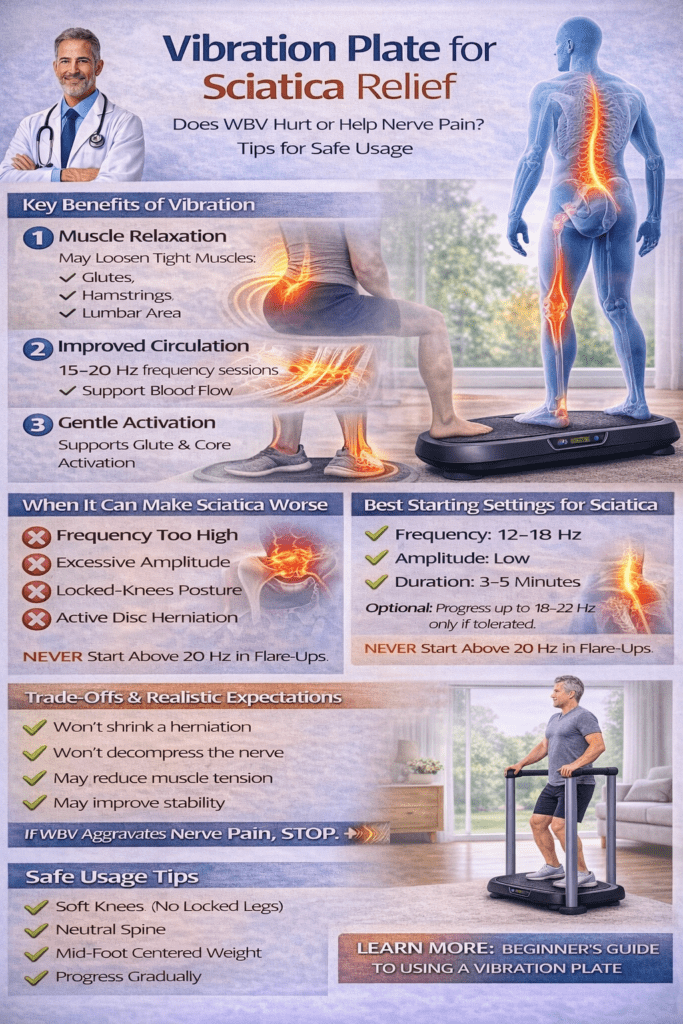
1️⃣ Muscle Relaxation
Many cases of sciatica involve tight surrounding muscles:
- Glutes
- Piriformis
- Hamstrings
- Lumbar erectors
Low-frequency vibration can stimulate muscles in a way that encourages relaxation and improved blood flow. For some people, this reduces muscle guarding around the irritated nerve.
2️⃣ Improved Circulation
Better circulation can help calm irritated tissues.
Lower-frequency sessions (15–20 Hz) may support blood flow without heavy compressive load.
This can feel similar to a gentle massage effect — especially when posture is correct.
3️⃣ Neuromuscular Activation
Sciatica often leads to:
- Weak glutes
- Inhibited core
- Poor hip stabilization
Moderate vibration paired with light movement (like supported mini squats) can gently activate stabilizing muscles. Better muscular support may reduce stress on the lumbar spine over time.
How It Can Make Sciatica Worse
This is important.
WBV can aggravate sciatica if:
- Frequency is too high
- Amplitude is excessive
- You stand rigid with locked knees
- You’re in an acute flare
- Severe disc compression
High-frequency vibration increases acceleration forces through the spine. If the nerve is already irritated, too much mechanical stimulation can worsen symptoms. This is why I never recommend starting above 20 Hz for someone with active nerve pain.
Best Starting Settings for Sciatica
Conservative programming wins here.
Recommended Starting Range:
- Frequency: 12–18 Hz
- Amplitude: Low
- Duration: 3–5 minutes
Progress gradually to 18–22 Hz only if tolerated, and avoid 30+ Hz during active symptoms.
For more detailed frequency guidance by goal, see:
https://www.vibrationforhealth.com/best-vibration-plate-frequency/
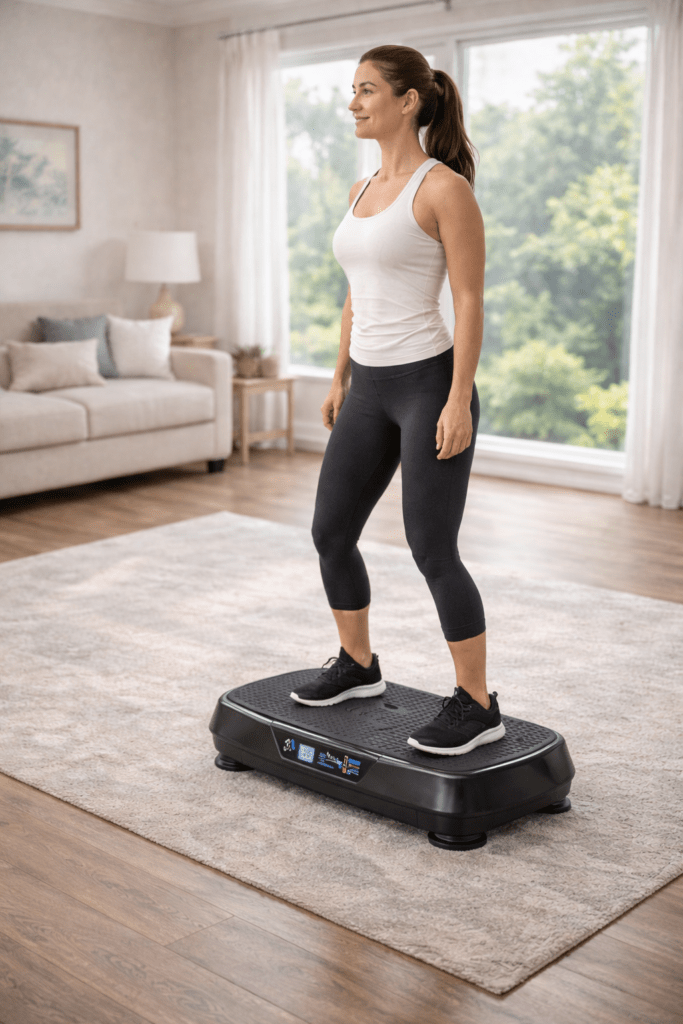
How to Stand (Critical for Sciatica)
Posture is everything.
✔ Soft knees
✔ Neutral spine (not overly arched)
✔ Weight centered over mid-foot
✔ Light core engagement
Avoid leaning forward aggressively.
If standing aggravates symptoms, try:
- Seated position with feet lightly on plate
- Gentle calf activation only
- Very short sessions
And if pain radiates more intensely during use — stop.
Trade-Offs to Understand
Vibration is low impact — but not zero load.
It can:
- Improve muscle activation
- Encourage circulation
- Support stabilization
It cannot:
- Shrink a herniated disc
- Instantly decompress a nerve
- Replace physical therapy
If your sciatica stems from structural compression, WBV may provide symptom relief but won’t address root cause alone.
Best outcomes happen when paired with:
- Core strengthening
- Hip mobility work
- Walking
- Proper lifting mechanics
When to Avoid It Completely
Avoid vibration plate use if you have:
- Acute severe disc herniation
- Progressive neurological symptoms (weakness, numbness spreading)
- Loss of bowel or bladder control (medical emergency)
- Severe spinal instability
And if you’re unsure, review safety considerations here:
https://www.vibrationforhealth.com/whole-body-vibration-safety/
Medical clearance matters if symptoms are severe.
Realistic Expectations
Within 1–2 weeks:
- Mild reduction in muscle tightness
- Improved tolerance to standing
Within 3–6 weeks:
- Better glute activation
- Improved lumbar stability
But if you expect vibration to “fix” nerve compression overnight — you’ll be disappointed.
Sciatica recovery often requires:
- Time
- Consistent rehab
- Postural correction
WBV is a support tool — not a cure.
Frequently Asked Questions
Can vibration cure sciatica?
No. It may reduce muscle tension and support stability, but it doesn’t eliminate structural nerve compression.
Should I use it during a flare-up?
Only at very low settings — and stop immediately if symptoms worsen.
Is sitting on the plate better than standing?
Sometimes yes for sensitive cases. It reduces spinal loading.
How often should I use it?
2–4 sessions per week at low intensity is reasonable to start.
What if my leg tingles more during use?
Stop immediately. Increased nerve symptoms are a sign intensity is too high.
Reputable Resources for More Information
- National Institutes of Health (NIH)
https://www.nih.gov/ - American Academy of Orthopaedic Surgeons (AAOS)
https://www.aaos.org/ - PubMed Research Database
https://pubmed.ncbi.nlm.nih.gov/
Conclusion
A vibration plate for sciatica can be helpful — but only when used thoughtfully.
- Start low.
- Keep sessions short.
- Prioritize posture.
- Pair with strengthening.
If it reduces muscle guarding and improves stability, it earns its place. If it increases nerve irritation, it’s not the right tool — at least not yet. The smartest approach with sciatica isn’t aggressive. It’s strategic.